
7 Aug 2026
Mistakes to Avoid When Buying Your First Commercial Property
Nobody hands you a manual before your first commercial property purchase. Most buyers figure out what they should have checked only after they've already skipped it, and by then the lesson has usually cost real money. The good news is that almost every one of these mistakes is entirely avoidable once you know what to look for. Here's the rundown.
Mistake 1: Not Verifying RERA Registration
This is the single most skipped step, and it really shouldn't be. Every legitimate commercial project carries a RERA registration number, independently verifiable on the state's RERA portal. It confirms the project is legally registered and unlocks access to disclosures the developer is required to make public.
Gaur City Center, for instance, carries the registration number UPRERAPRJ4780. Checking this on the UP RERA website takes about five minutes and can save you from a much longer, much costlier problem down the line. Treat it as non-negotiable, not optional homework.
Mistake 2: Glossing Over the Payment Plan
Buyers often glance at the price per square foot and breeze past the payment plan entirely, only to realise later how the actual cash outflow is structured. Payment plans differ by inventory type and by project. For instance, Gaur City Center, offices and studio units follow a 40:60 plan, while retail spaces follow a 30:70 structure.

*Prices, payment plans, and availability listed above are indicative, subject to change without prior notice, and may vary depending on inventory availability, terms and conditions, or revisions by management. Please contact our team or visit the official website for the most current pricing and verified details.
Not knowing whether you're paying 40 percent or 60 percent upfront can throw off your entire financial plan, especially if you're combining savings with a loan. Read the schedule as carefully as you'd read the price itself.
Mistake 3: Ignoring Footfall and Catchment Analysis
A commercial unit is only as valuable as the people who can actually reach it. First-time buyers tend to focus heavily on the unit, its layout, size, and finish, while overlooking the catchment population and footfall potential surrounding it. A development sitting within a large catchment, with strong connectivity, almost always has a wider base of potential customers or tenants than one that looks impressive on paper but sits in a quiet, low-traffic pocket.
Mistake 4: Underestimating Parking and Infrastructure
Parking isn't a minor checkbox for commercial buyers, it's frequently the deciding factor for retail customers and office employees alike. A project with limited or poorly planned parking can struggle to draw footfall no matter how strong the location otherwise looks. Multi-level parking built for high vehicle volumes, paired with wide road frontage, are practical details worth verifying rather than assuming.
Mistake 5: Skipping the Developer's Track Record
A polished brochure says very little about whether a developer actually delivers on time. Before committing, dig into the developer's history: how many projects have they completed, how close to schedule were those deliveries, and how do existing owners in earlier projects describe their experience. This research takes a bit of time upfront, but it's far cheaper than discovering delivery issues after you've already paid a significant chunk of your payment plan.
Mistake 6: Choosing Inventory Type Without Understanding the Difference
Offices, studio units, and retail spaces serve genuinely different purposes and attract different kinds of tenants. First-time buyers sometimes pick based purely on price per square foot, without weighing whether an office actually suits their investment goal better than a retail space, or the other way around. Every inventory type comes with its own payment structure, tenant profile, and use case, and understanding these differences upfront saves a lot of second-guessing later.
Mistake 7: Overlooking the Fine Print on Charges
The BSP, or base selling price, is rarely the final number you'll actually pay. GST, maintenance charges, parking charges where applicable separately, and other statutory costs can add meaningfully to the total outlay. First-time buyers sometimes calculate their entire budget purely on the BSP and get caught off guard by these additional costs later. Ask for a full cost breakdown before you commit, not after.
Mistake 8: Rushing the Decision Under Pressure
Sales pitches love urgency: limited units, price hikes next week, offers expiring tonight. First-time buyers sometimes let that pressure shortcut their due diligence. A genuinely good opportunity will still be a good opportunity after you've verified the RERA number, read the payment plan twice, and slept on the decision. If a deal only makes sense under pressure, that's worth noticing.
Mistake 9: Not Thinking About Exit or Resale
First-time buyers tend to focus entirely on the purchase and rarely think about how easy or difficult it will be to exit later, whether that means resale or re-leasing to a new tenant. Properties in locations with strong catchment, good connectivity, and verified compliance tend to attract interest more easily whenever an exit becomes necessary. Asking "would someone else want this in five years" is a useful filter to apply before buying, not after.
Pre-Purchase Checklist
· Confirm the RERA registration number and cross-check it on the official portal
· Understand the payment plan and what's due at each stage
· Evaluate the catchment population and footfall potential of the location
· Check parking capacity and road infrastructure around the project
· Research the developer's completed project history
· Clarify which inventory type genuinely suits your investment goal
· Ask for a full cost breakdown beyond just the BSP
· Take your time, even when the pitch says you can't
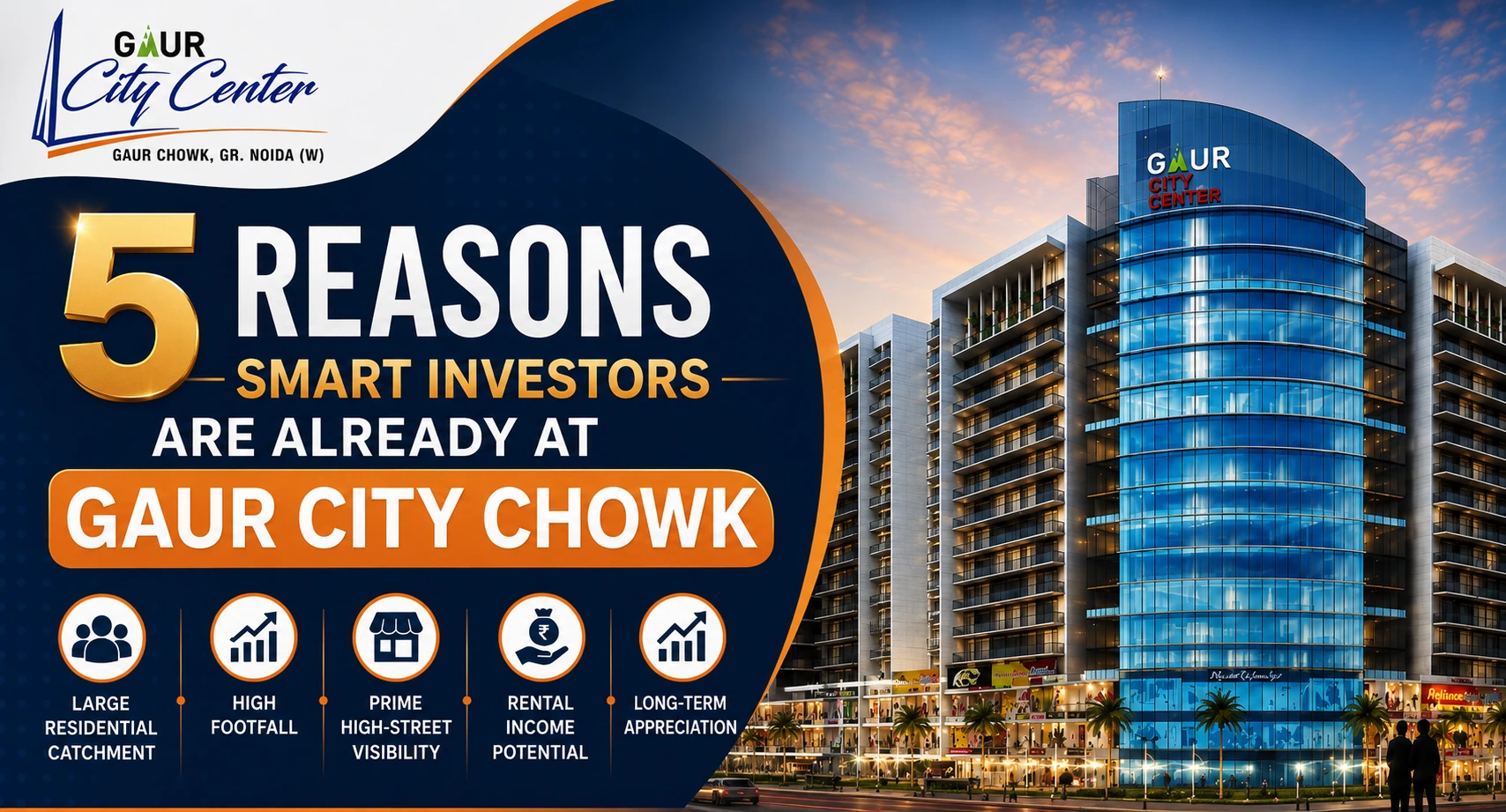
Most first-time commercial property mistakes boil down to one thing: skipping verification, whether that's the RERA number, the payment plan details, or the developer's delivery history. None of these checks are complicated, they just take a bit of patience before you sign anything. If you're evaluating a project like Gaur City Center at Gaur Chowk, Greater Noida West, start with the RERA number, read the payment plan carefully, and weigh the location fundamentals before making your call. A little diligence upfront goes a long way toward a purchase you feel good about years later.
FAQs
What's the very first thing I should check before buying commercial property?
RERA registration. It's the most basic verification step, takes only minutes, and immediately tells you whether the project is legitimate.
Is a lower BSP automatically the better deal?
Not necessarily. A lower price per square foot doesn't account for location, footfall, parking, or the developer's track record, all of which shape the property's long-term usability and value far more than the headline number.
How important is parking for commercial property?
Genuinely important. For both retail and office use, inadequate parking can significantly limit footfall and tenant interest, no matter how strong the location otherwise appears.
Should I choose an office or a retail space for my first investment?
It depends on your budget, risk appetite, and the tenant profile you're aiming for. Offices tend to suit longer-term leasing arrangements, while retail spaces lean more heavily on footfall and visibility.
Just fill out the form below
I authorise company representatives to Call, SMS, Email, or WhatsApp me about its products and offers. This consent overrides any registration for DNC/NDNC.
Category
Gaur City Center Commercial Property
I authorise company representatives to Call, SMS, Email, or WhatsApp me about its products and offers. This consent overrides any registration for DNC/NDNC.