
1 Sep 2026
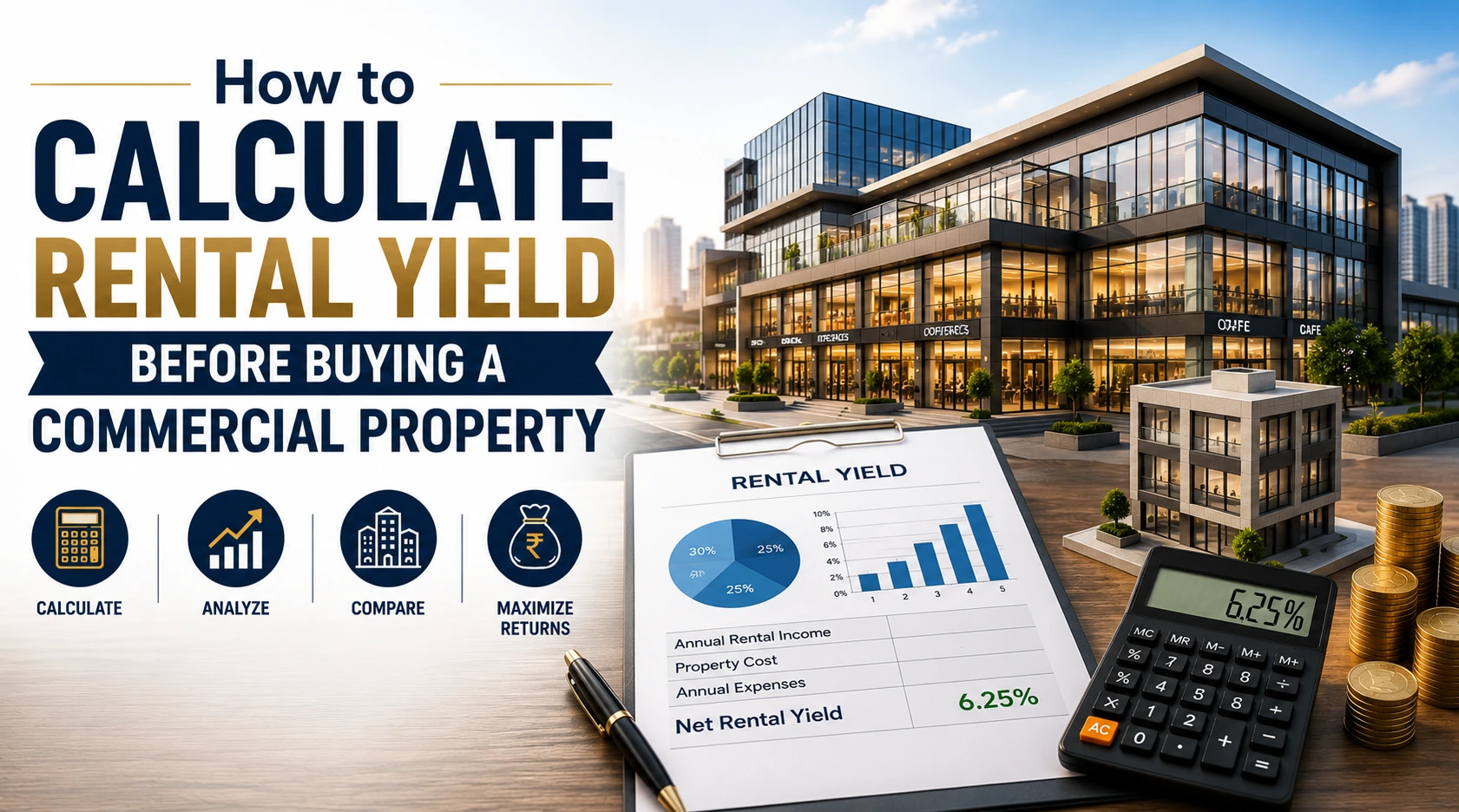
How to Calculate Rental Yield Before Buying a Commercial Property
A commercial property can look impressive on paper and still turn out to be a mediocre investment once the numbers are actually run. This is exactly why learning how to calculate rental yield before buying a commercial property matters more than getting swept up by a good-looking brochure or a well-located address. Yield is not the only thing that determines whether a purchase makes sense, but it is one of the most practical checks any buyer can do before committing.
What Rental Yield Actually Means
Rental yield is simply a way of expressing how much annual rental income a property generates relative to what it costs. It gives a buyer a standardized figure that can be compared across different properties, formats, and locations, instead of comparing raw rental numbers that mean very little without context.
There are two versions of this calculation worth knowing.
Gross rental yield looks at annual rental income against the property's total cost, without factoring in any ongoing expenses. It is the quickest way to get a rough sense of a property's earning potential.
Net rental yield goes a step further and subtracts recurring costs, such as maintenance charges, property tax, and insurance, from the annual rental income before comparing it to the property's cost. This gives a more realistic picture of what an owner actually takes home.
How to Calculate Rental Yield: The Formula
Working out gross rental yield involves three straightforward steps.
First, establish the annual rental income the property is expected to generate. If you have a monthly rental figure, multiply it by twelve to get the annual number.
Second, divide that annual rental income by the total cost of the property, including the base cost and any other charges that formed part of the acquisition.
Third, multiply that figure by 100 to express it as a percentage.
For net rental yield, the same process applies, except the annual maintenance, tax, and insurance costs are subtracted from the annual rental income before it is divided by the property's cost. This is the figure that matters more to an owner planning to hold the property over the long term, since it reflects actual take-home income rather than a headline number.
Why the Same Formula Can Give Very Different Results
Two commercial properties priced identically can produce very different yields depending on the rent they command, and the rent they command depends heavily on factors that have nothing to do with the price tag itself.
Location and footfall. A unit in a high-catchment area with strong daily footfall tends to attract stronger rental demand than an identically priced unit in a quieter stretch, which directly affects the income side of the yield equation.
Format. Retail spaces, offices, and compact studio units each attract different kinds of tenants with different willingness to pay, and yield calculations should always be done format by format rather than assuming one number applies across an entire project.
Building quality and amenities. Features like dedicated parking, green building certification, and reliable connectivity influence how easily a space attracts and retains tenants, which in turn affects how consistently the rental income side of the calculation holds up over time.
Developer and project credibility. A RERA-registered project with a developer that has a genuine delivery track record reduces the uncertainty around whether the property will be completed and handed over as promised, which matters because a yield calculation is only meaningful once the property is actually ready to generate income.
A Simple Way to Compare Properties
Once you have worked out the yield for one property, the real value of the exercise comes from comparing it against similar properties in the same catchment and format. A single yield figure in isolation does not tell you much. Placed next to two or three comparable options, it starts to show which property is genuinely priced in line with its earning potential and which one is priced ahead of what the rental market in that location can realistically support.
This comparison also works well across formats within the same address. An office, a studio unit, and a retail space in the same development will often produce different yields because they attract different tenants at different rent levels, even though they share the same location, connectivity, and building infrastructure. Running the calculation separately for each format, rather than assuming a single number applies across the board, gives a far more accurate picture of where the better opportunity actually lies.
Practical Checks Before You Run the Numbers
Before calculating yield on any commercial property, a few checks help ensure the exercise is grounded in reality rather than assumption.
Verify RERA registration independently rather than relying on what a brochure states. This confirms the project's legal standing and gives access to official disclosures. For projects like Gaur City Center at Gaur Chowk, registered under UPRERAPRJ4780, this information is a matter of public record and can be checked directly.
Look at the developer's delivery history rather than just their marketing pitch. A track record of completed projects, such as Gaursons having delivered upwards of 75,000 units over more than 30 years, speaks to whether a property will actually be ready to generate rental income within a reasonable timeframe.
Account for realistic rental expectations rather than optimistic ones. Rental income projections should be based on comparable properties in the same catchment and format, not on hopeful estimates.
Factor in ongoing costs honestly. Maintenance, taxes, and any association charges reduce the income an owner actually keeps, which is why net yield tells a more complete story than gross yield alone.
Rental yield will not tell you everything about a commercial property, but it is one of the clearest, most comparable numbers available to a buyer trying to separate a genuinely sound investment from one that simply looks good. Learning how to calculate rental yield and applying it consistently, format by format and property by property, turns an emotional buying decision into a more grounded one. For current pricing, unit sizes, and rental estimates specific to any unit at Gaur City Center, please get in touch directly. T&C apply.
Just fill out the form below
I authorise company representatives to Call, SMS, Email, or WhatsApp me about its products and offers. This consent overrides any registration for DNC/NDNC.
Category
Gaur City Center Commercial Property
I authorise company representatives to Call, SMS, Email, or WhatsApp me about its products and offers. This consent overrides any registration for DNC/NDNC.